Instantaneous Thermal Exchange Mechanism
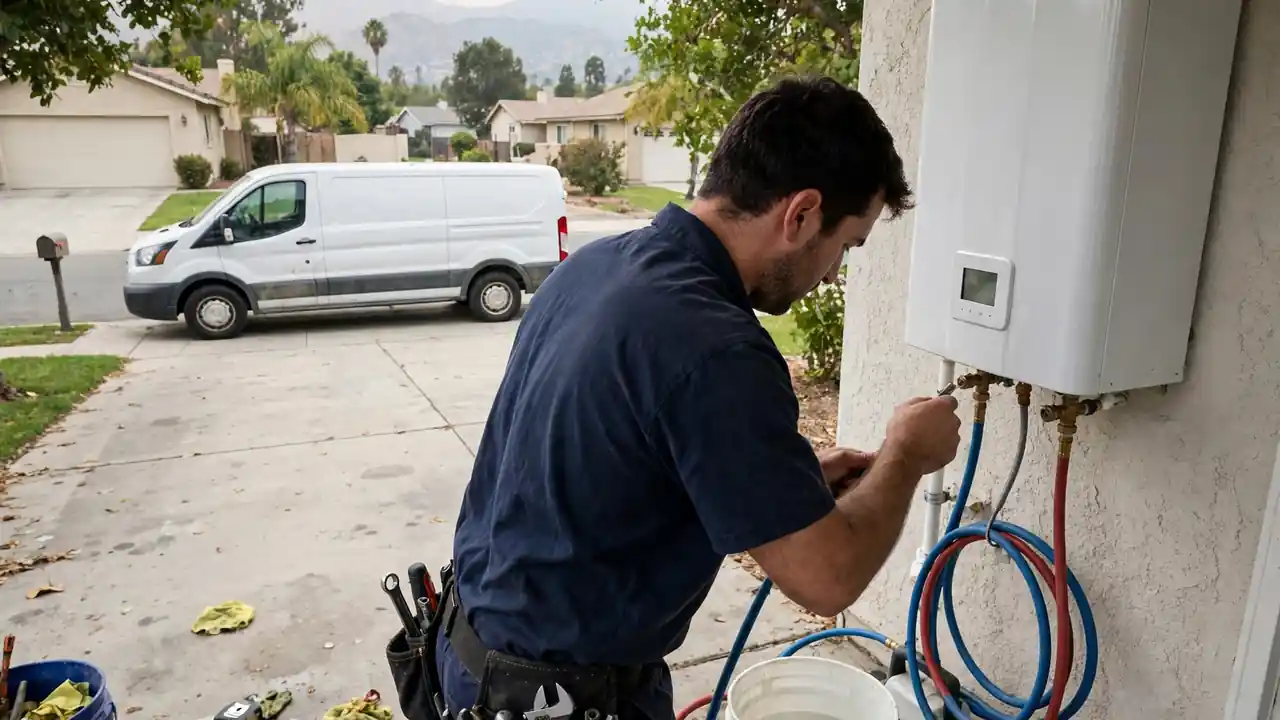
When an indoor hot water fixture opens, cold water triggers an internal flow sensor turbine at a minimum flow rate of 0.4 to 0.5 GPM. The control board initiates a combustion blower fan, opens dual-stage gas valves, and fires spark ignition rods. Cold water passes through high-conductivity copper coils, instantly absorbing heat before delivery to household fixtures.
Because heating occurs instantaneously on demand, micro-fractures in flame sensors, clogged inlet filters, or sticking proportional gas valves immediately manifest as abrupt hot water shutoffs or persistent cold bursts.
Impact of Chino Basin Mineral Calcification
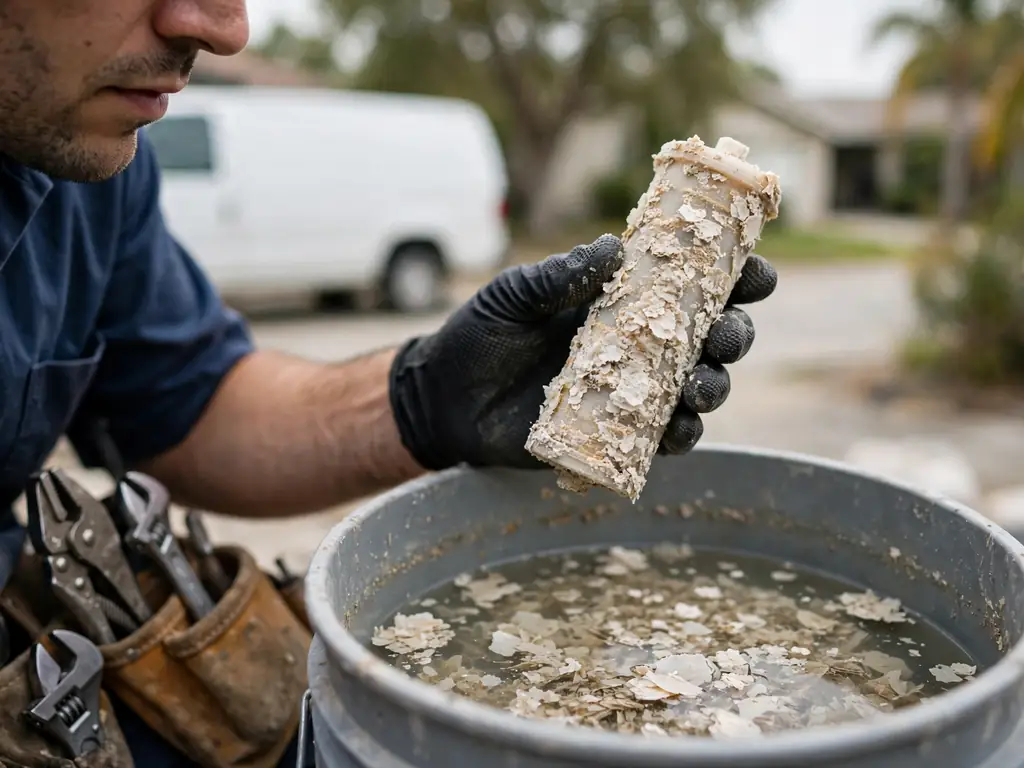
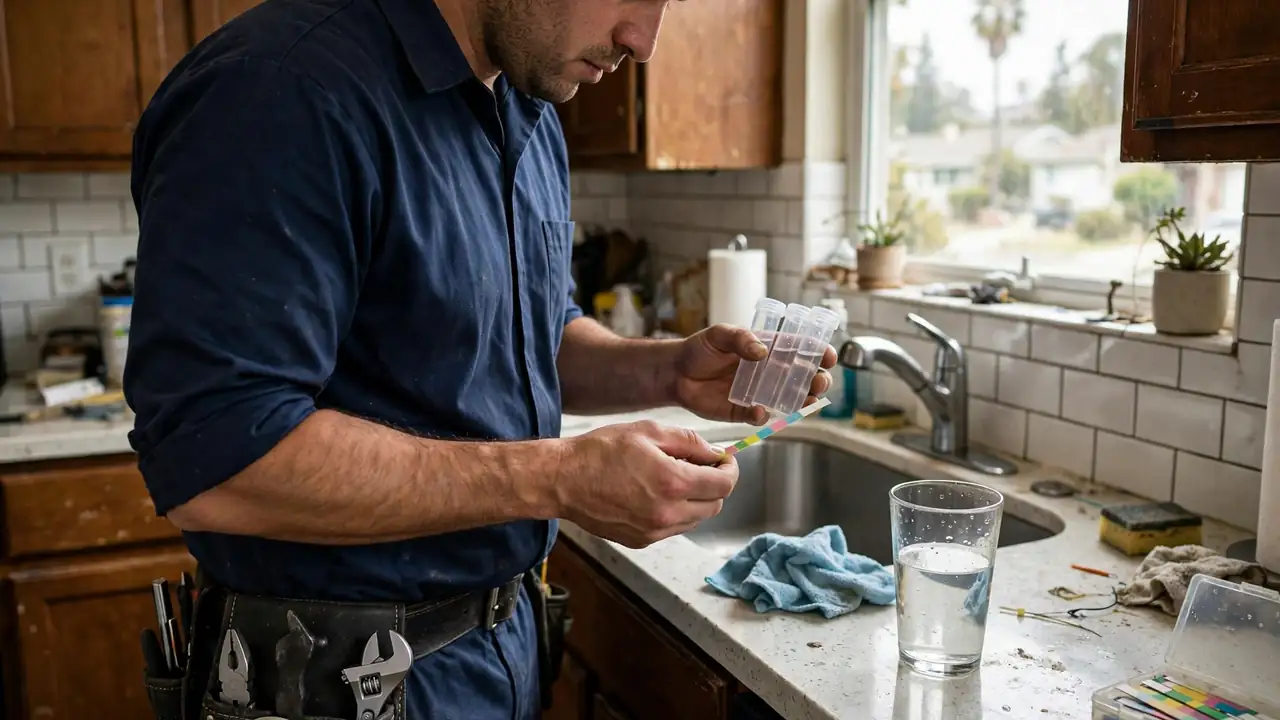
Montclair municipal tap water contains 15 to 22 grains per gallon of dissolved minerals. When water reaches 120°F inside heat exchanger tubes, calcium carbonate precipitates out of solution, coating internal copper surfaces with thermal-insulating scale.
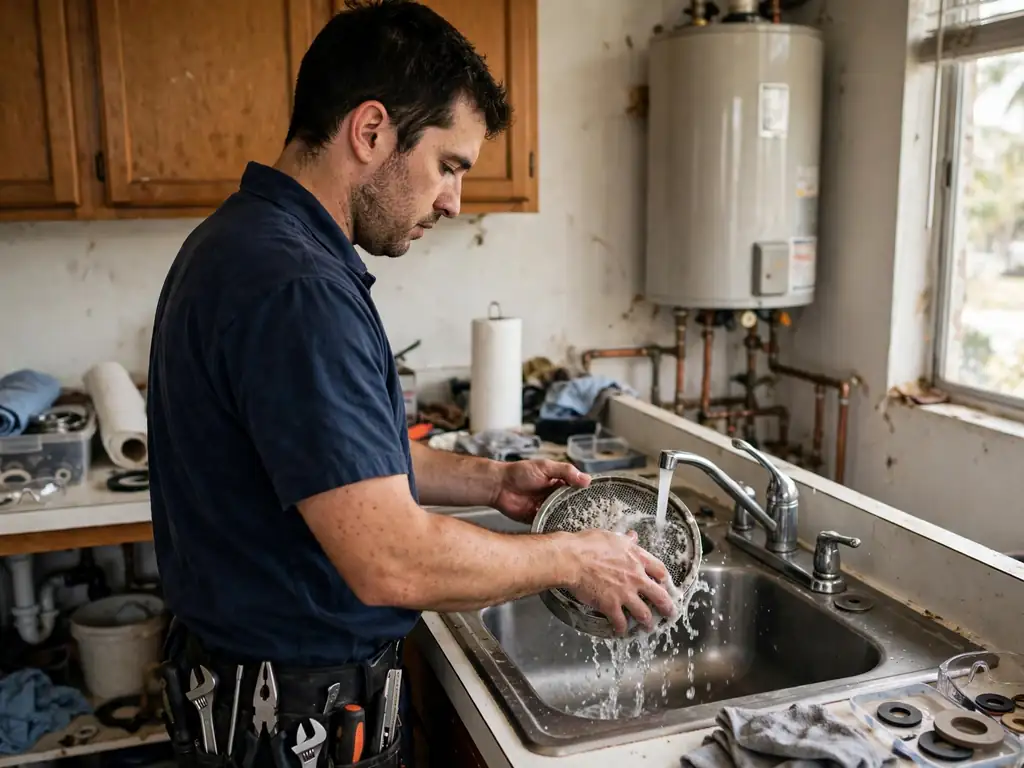
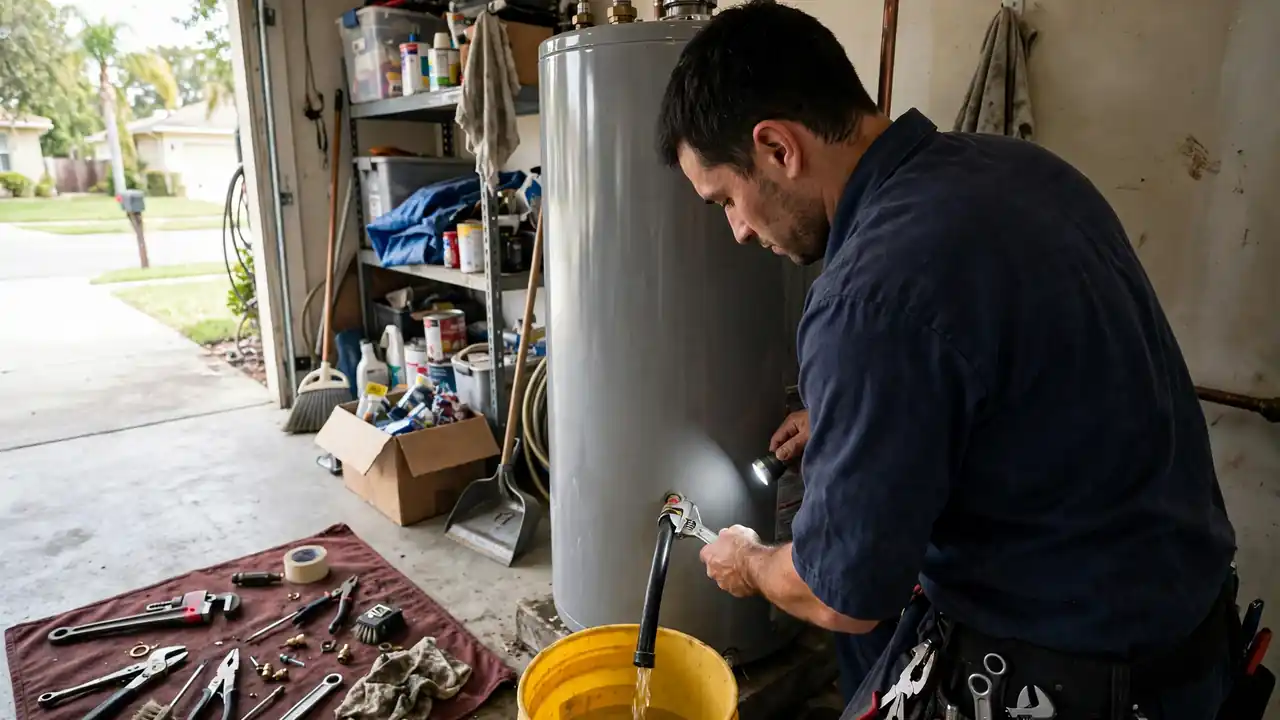
Scale accumulation narrows internal water passageways, degrades thermal conductivity, and forces burner flames to fire at maximum intensity. This causes localized heat exchanger metal overheating, kettling noise, and thermal limit lockouts (Error Code E011). Annual recirculating descaling using food-grade citric acid removes these mineral barriers safely.
Objective Repair vs. Replacement Decision Criteria
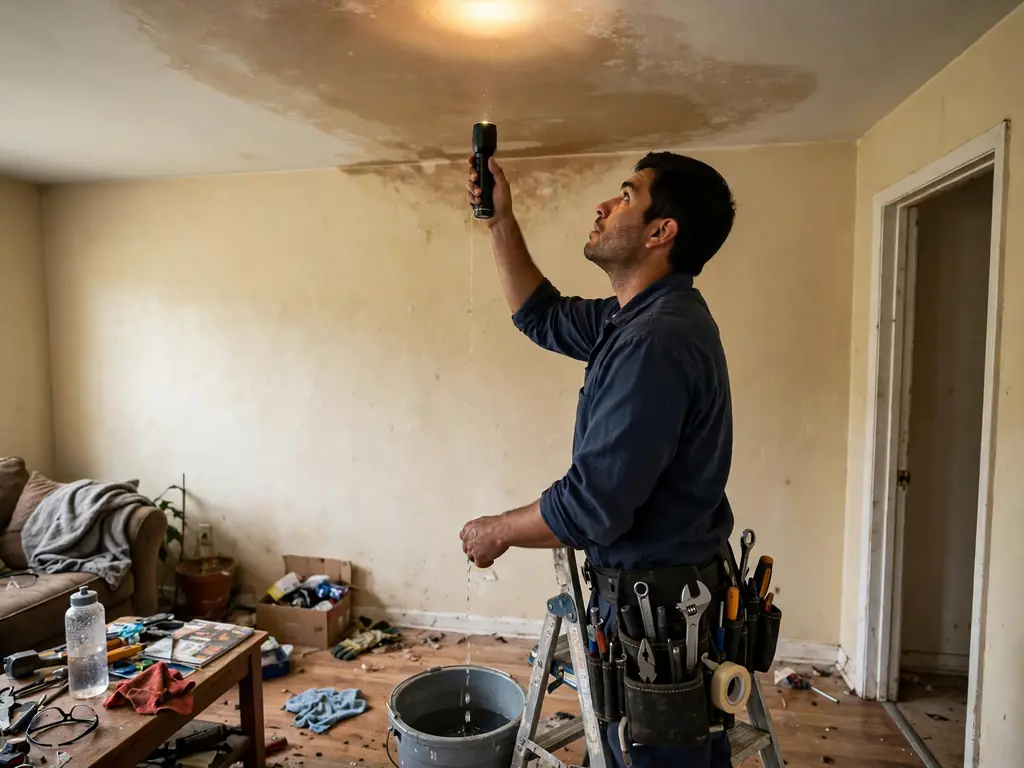
Component repair remains the recommended economic choice when equipment is under 12 years old and faults are isolated to replaceable sensors, igniters, circuit boards, or inlet valves. Full system replacement becomes necessary when internal copper heat exchangers crack, chronic corrosion breeches the combustion chamber, or repair costs exceed 50% of new unit installation value.
Plumber Montclair provides detailed cost comparisons for both repair and replacement options, allowing property owners to make the most cost-effective decision for their property.