Why sewer lines fail
Sewer laterals fail due to mechanical aging of legacy pipe materials, severe tree root colonization, and tectonic ground shifting throughout Southern California. Unlined clay tiles shatter under expansive soil pressure, while cast iron develops severe internal tuberculation scale and bottom-channel rotting.
When subterranean pipe joints shear or crack, escaping effluent accelerates surrounding soil subsidence. Roots penetrate the fissure, expanding continuously until the line suffers total structural collapse.
Repair or replace
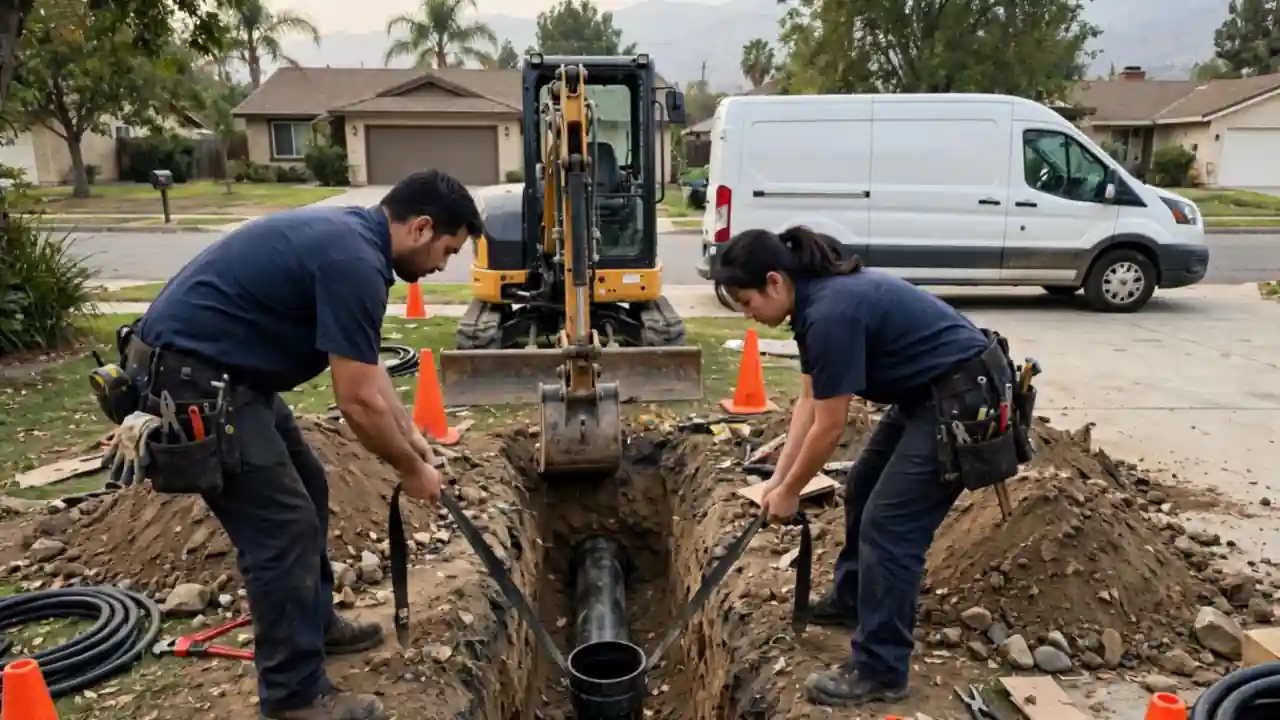
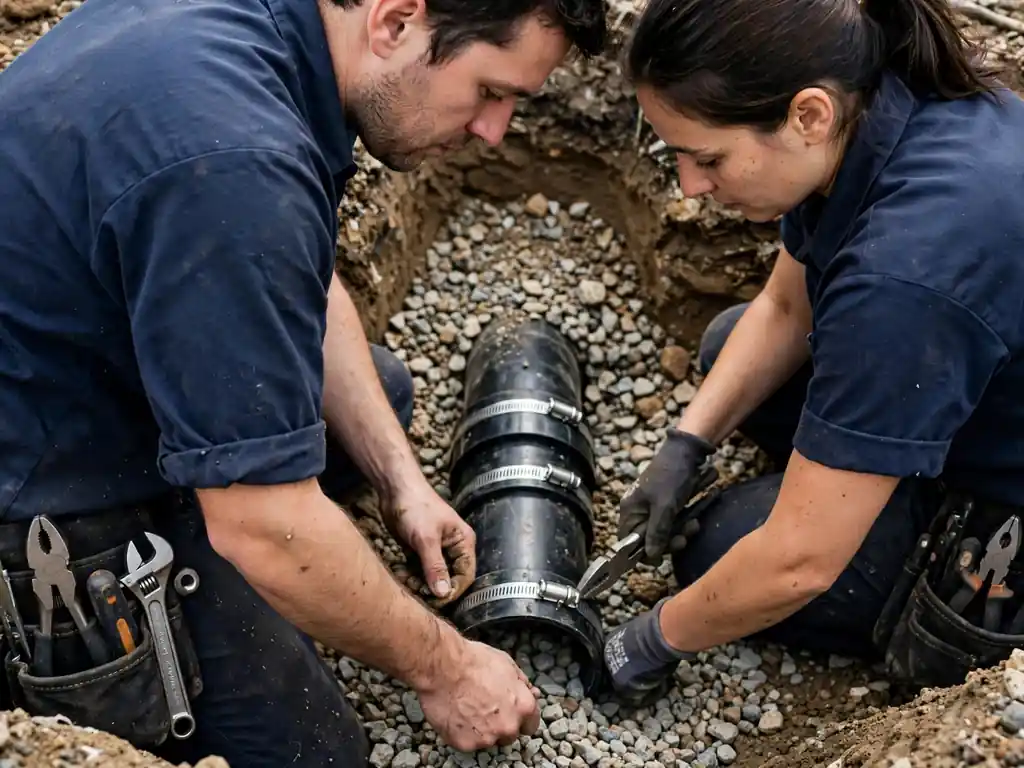
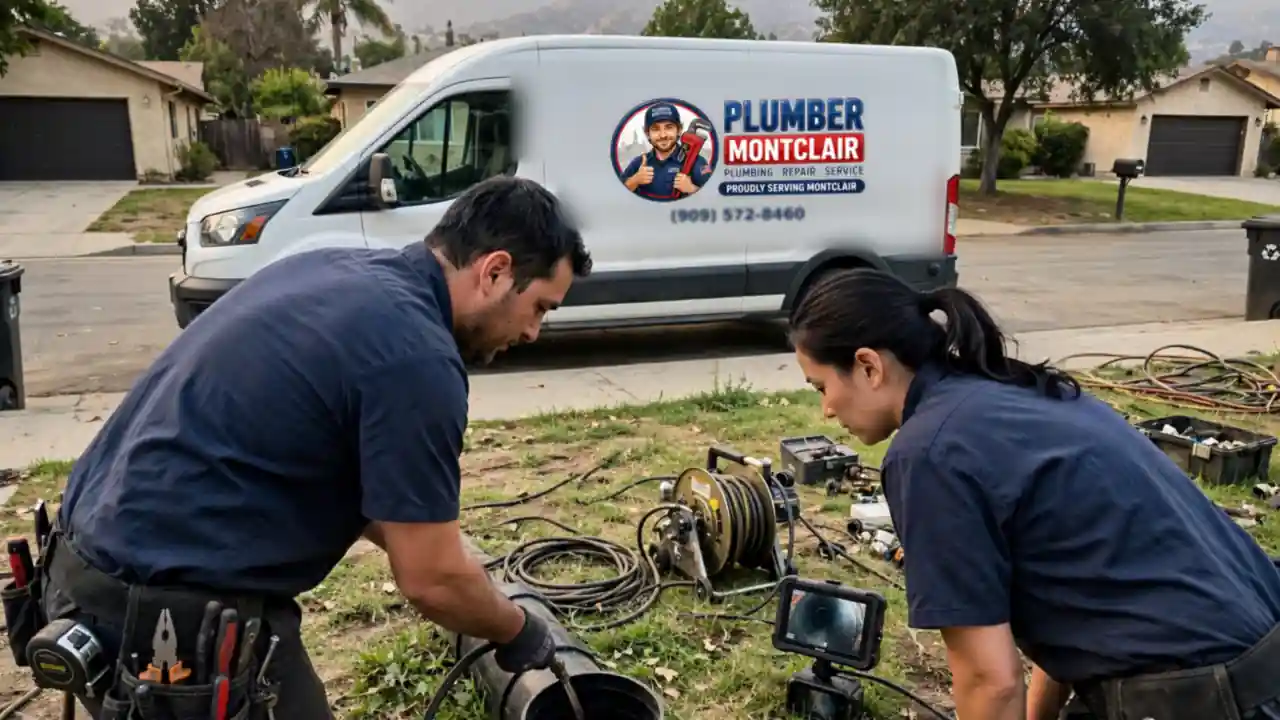
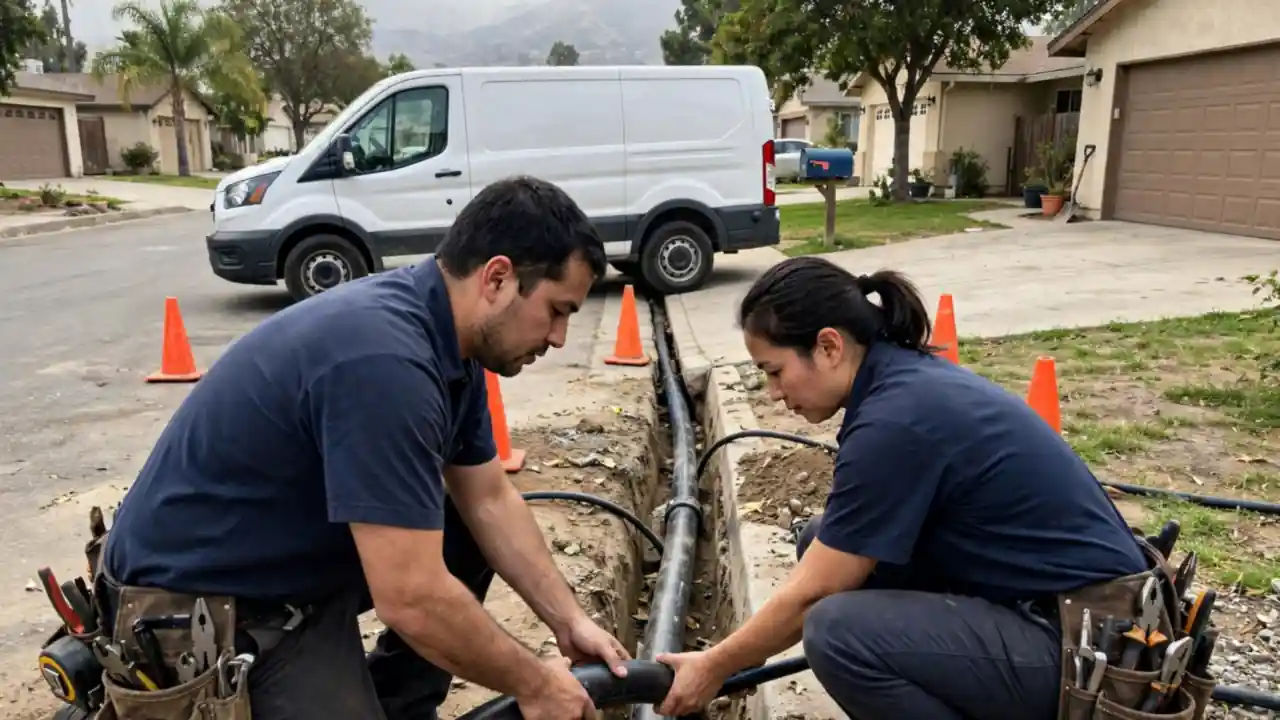
Isolated joint offsets qualify for localized spot excavation or cured-in-place pipe (CIPP) lining. Laterals exhibiting widespread channel corrosion, multiple structural offsets, or extensive pipe collapse require complete replacement using trenchless pipe bursting or open excavation to eliminate repetitive failures.
What happens if you leave it
Subterranean sewer line failures worsen over time without intervention. Ongoing wastewater leakage undermines concrete foundation slabs, washes away structural subsoil, and triggers hazardous interior sewage overflows.